Electric Bikes for Sale in Texas – Shop E-Bikes from $499
Looking for electric bikes for sale in Texas? US Electric Bikes makes it easy to compare and buy electric bikes online, with models starting from $499 and shipping available to customers across Texas.
Shop folding, commuter, fat-tire and mountain-style e-bikes for sale from brands including Engwe, Gotrax, INVANTI, LELEKUAI, Victrip, Vitilan, Vivi and Wooken. Whether you need an electric bicycle for everyday commuting in Houston, getting around Austin, riding in Dallas-Fort Worth or exploring mixed terrain outside the city, you can compare motors, batteries, range, tires and prices before you buy.
Our current electric bike selection ranges from affordable compact commuters to longer-range fat-tire models, with prices from approximately $499 to $1,299.
Shop Electric Bikes for Sale in Texas
Buying an e-bike should start with how you actually plan to use it. Texas riders may need very different bikes depending on whether they commute on paved streets, carry a bike in an RV or vehicle, ride recreational paths, or regularly encounter gravel and uneven surfaces.
Our Texas electric bike collection includes several riding styles:
- Folding electric bikes for commuters, apartments, RVs and riders who need compact storage.
- Fat-tire e-bikes for riders who want additional stability and comfort over mixed surfaces.
- Commuter electric bikes for everyday transportation and paved urban riding.
- Mountain-style electric bikes for riders who want larger wheels, suspension and versatility.
- Long-range e-bikes for riders who place greater importance on battery capacity and extended trips.
If you have been searching for an e-bike for sale but are unsure which style fits your needs, compare the models below by motor, intended use and price.
Compare E-Bikes for Sale in Texas
| Electric Bike | Motor | Best For | Price |
|---|---|---|---|
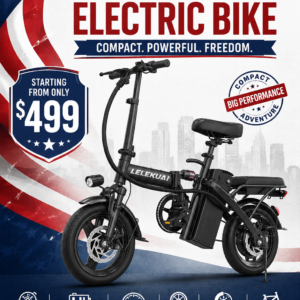
| LELEKUAI Folding Electric Bike | 560W | Affordable compact commuting | $499 |
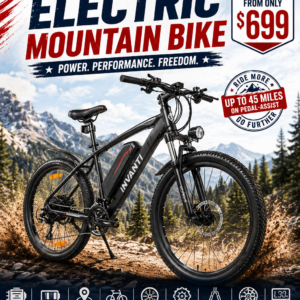
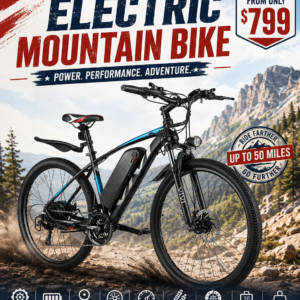
| INVANTI Electric Mountain Bike | Up to 750W Peak | Commuting and mixed terrain | $699 |
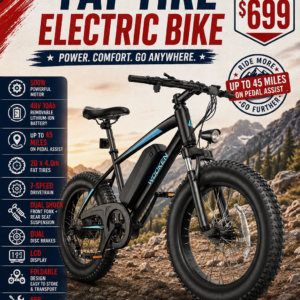
| Wooken Fat Tire Folding E-Bike | 500W | Mixed surfaces and fat-tire stability | $699 |
| Vivi Electric Mountain Bike | 500W | Everyday and mountain-style riding | $799 |
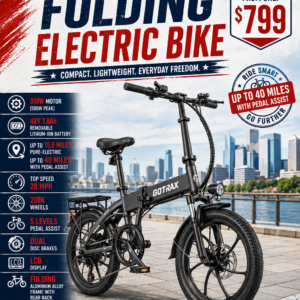
| Gotrax R1 Folding Electric Bike | 350W / 500W Peak | Lightweight commuting and portability | $799 |
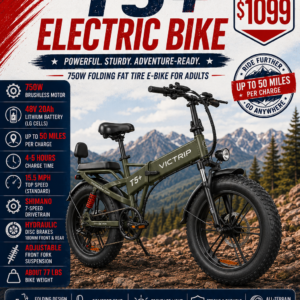
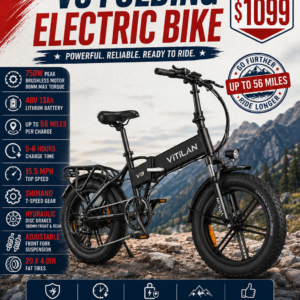
| Victrip T5+ | 750W | Comfortable everyday fat-tire riding | $1,099 |
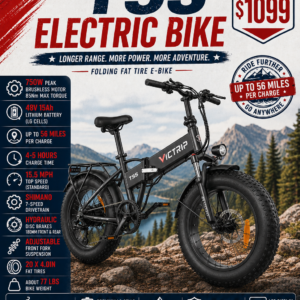
| Victrip T5s | 250W Rated / 750W Peak | Longer-range riding | $1,099 |
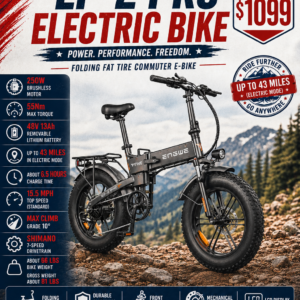
| Engwe EP-2 Pro | 250W Rated | Folding fat-tire commuting | $1,099 |
| Vitilan V3 | 250W Rated / 750W Peak | Folding fat-tire riding | $1,099 |
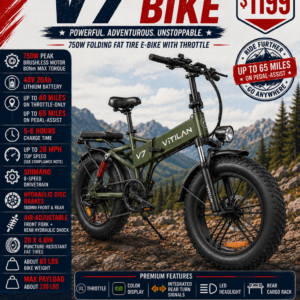
| Vitilan V7 | 250W Rated / 750W Peak | Comfort, hills and mixed terrain | $1,199 |
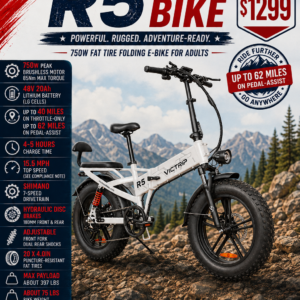
| Victrip R5 | 250W Rated / 750W Peak | Full suspension and mixed terrain | $1,299 |
Product availability, specifications and pricing can change. Check the individual product page for the latest details before ordering.
Where to Buy an Electric Bike in Texas
If you are wondering where to buy an electric bike in Texas, shopping online gives you the ability to compare different brands, battery sizes, motor specifications, tire styles and price points without being limited to the inventory of one local store.
US Electric Bikes serves customers throughout Texas. You can browse our available electric bicycles for sale, review specifications and order your preferred model online for delivery to an eligible Texas address.
We serve riders throughout major Texas communities and surrounding areas, including:
- Houston
- Dallas
- Austin
- San Antonio
- Fort Worth
- El Paso
- Arlington
- Corpus Christi
- Plano
- Lubbock
- Irving
- Frisco
- McKinney
- Round Rock
- and other Texas communities
You do not need to live close to a physical e-bike shop to compare our current selection. Browse online, choose the model that matches your riding needs and check delivery availability during your purchase.
Affordable Electric Bikes for Sale Starting at $499
Searching for an affordable electric bicycle does not necessarily mean choosing the first cheap e-bike you find. Battery capacity, brakes, motor characteristics, bike weight, tire size and replacement-part availability can matter just as much as the purchase price.
Our current lineup starts with the LELEKUAI Folding Electric Bike at $499. Riders looking around the $699 price level can consider models such as the INVANTI Electric Mountain Bike and Wooken Fat Tire Folding E-Bike.
Customers who want larger batteries, fat tires, additional suspension or longer-range configurations can compare models from Victrip, Vitilan and Engwe further up the range.
Instead of asking only, “What is the cheapest e-bike for sale?”, consider the total value of the bike for the type of riding you expect to do.
Buy an E-Bike for Texas Commuting
Texas metropolitan areas can involve long distances, busy roads and substantial traffic. For urban riders, an electric bike can be useful for shorter commutes, neighborhood trips, campus transportation and recreational riding where bicycle access is permitted.
Electric Bikes for Houston Riders
Houston’s relatively flat terrain means many riders do not necessarily need the heaviest or most powerful configuration for everyday paved commuting. A folding or commuter-oriented e-bike can provide a more practical balance of portability, range and everyday usability.
Models such as the Gotrax R1 and LELEKUAI Folding Electric Bike are worth comparing if storage and city riding are priorities.
Electric Bikes for Dallas-Fort Worth
For riders across Dallas, Fort Worth, Arlington, Plano, Frisco and the wider DFW area, consider your expected round-trip mileage before choosing a battery. Longer suburban journeys can make battery capacity and riding range more important than they would be for short downtown trips.
Electric Bikes for Austin
Austin riders may use e-bikes for commuting, recreation and access to the city’s growing bicycle network. Riders dealing with hills may want to place greater emphasis on motor performance, gearing, battery capacity and brakes.
Electric Bikes for San Antonio
For San Antonio riders, commuter and fat-tire models can both make sense depending on the route. A conventional commuter setup works well for paved riding, while wider tires may appeal to riders who regularly encounter rough pavement or mixed surfaces.
Folding Electric Bikes for Sale in Texas
A folding e-bike can be especially useful for Texans who need to store a bike in an apartment, office, garage, RV or vehicle.
Our folding options include compact commuter models as well as larger fat-tire designs. The Gotrax R1 focuses on portability, while bikes such as the Engwe EP-2 Pro, Vitilan V3, Vitilan V7 and several Victrip models combine folding frames with wider tires and larger battery configurations.
Before buying a folding electric bike, compare the folded dimensions and total bike weight as well as the motor and battery. A bike can fold without necessarily being lightweight enough to carry frequently.
Fat-Tire Electric Bikes for Texas
Fat-tire electric bikes generally use wider tires than conventional bicycles and can provide additional cushioning, traction and stability on rough pavement, gravel and other mixed surfaces.
Models such as the Wooken Fat Tire, Engwe EP-2 Pro, Vitilan V7 and Victrip R5 are worth comparing if wider tires are high on your buying list.
Fat tires also add weight and rolling resistance, so they are not automatically the best option for every commuter. Riders who spend nearly all of their time on smooth paved roads may prefer a lighter configuration.
Electric Mountain Bikes and Mixed-Terrain E-Bikes
Texas is much more than flat city roads. Riders looking for an electric mountain bike for sale or a bike for gravel and uneven terrain should pay particular attention to tire size, suspension, brakes, gearing and battery capacity.
The INVANTI Electric Mountain Bike and Vivi Electric Mountain Bike provide mountain-style platforms, while fat-tire models such as the Wooken, Vitilan V7 and Victrip R5 offer alternative configurations for mixed-surface riding.
Remember that a bike’s off-road capability does not automatically mean that electric bicycles are permitted on every trail.
How to Choose the Best Electric Bike to Buy
Before you buy an e-bike, compare these six factors:
1. Riding Distance
Estimate your normal round-trip distance rather than relying only on a manufacturer’s maximum advertised range. Rider weight, hills, wind, tire pressure, temperature and assistance level can all affect real-world battery range.
2. Motor
Motor specifications affect acceleration and climbing performance, but a larger wattage number alone does not tell you how a bike will perform. Gearing, controller settings, torque, bike weight and rider weight also matter.
3. Battery Capacity
A larger battery can support longer rides but normally increases bike weight and price. Choose enough capacity for your regular route with some reserve rather than buying solely based on the largest advertised battery.
4. Tire Size
Narrower tires can feel more efficient on pavement, while wider tires provide additional cushioning and stability on rougher surfaces.
5. Folding vs. Full-Size Frame
Choose a folding bike when storage or transportation is a priority. Choose a conventional frame when you value full-size geometry more than compact storage.
6. Brakes and Suspension
Riders traveling at higher assisted speeds or dealing with uneven roads should pay close attention to braking equipment and suspension rather than focusing exclusively on motor power.
Texas Electric Bike Laws in 2026
Texas uses a three-class system for qualifying electric bicycles.
- Class 1: The motor assists while the rider pedals and assistance ends at 20 mph.
- Class 2: The motor can propel the bicycle without pedaling and assistance ends at 20 mph.
- Class 3: The motor assists while pedaling at speeds above 20 mph and below 28 mph under Texas statutory definitions.
Under Texas law, a qualifying electric bicycle must have fully operable pedals, an electric motor of fewer than 750 watts and an assisted speed no greater than the state’s statutory limit.
A rider must be at least 15 years old to operate a Class 3 electric bicycle, although a younger person may ride as a passenger.
Local authorities can also regulate bicycle use in certain locations, so riders should check city and trail-specific rules rather than assuming the same access applies everywhere in Texas.
This information is provided as a general guide and is not legal advice. Always confirm current state and local regulations before riding.
Can You Ride an E-Bike on Texas State Park Trails?
Texas Parks and Wildlife currently states that electric bicycles are allowed on state park roads where conventional bicycles are allowed, but e-bikes are not currently permitted on Texas state park trails.
Rules can differ on city property, county trails and federal land, so always check the rules for the specific route before taking an electric bike onto a recreational trail.
Are There Electric Bike Rebates in Texas?
Texas does not have one universal e-bike purchase incentive that automatically applies to every customer and every retailer. However, some local programs may be available.
For example, Austin Energy currently operates an E-Ride rebate program for qualifying customers purchasing eligible vehicles through participating dealerships. Eligibility, approved retailers, purchase-price requirements and available rebate amounts apply.
Do not assume a particular electric bike purchased from US Electric Bikes qualifies for an Austin Energy rebate unless the purchase meets the program’s current participating-dealer and vehicle requirements.
Why Buy an Electric Bike Online?
Shopping for an electric bike online makes it easier to compare several models side by side instead of choosing from the limited inventory available at one location.
Before placing an order, compare:
- Current price
- Motor specifications
- Battery capacity
- Estimated riding range
- Top assisted speed
- Tire size
- Brake type
- Suspension
- Bike weight
- Maximum payload
- Folding capability
The right electric bike is not necessarily the model with the largest motor or highest advertised range. It is the bike whose specifications fit your actual commute, riding environment, storage requirements and budget.
Frequently Asked Questions About Buying E-Bikes in Texas
Where can I buy electric bikes in Texas?
You can shop electric bikes online through US Electric Bikes for delivery to eligible addresses throughout Texas. Our selection includes commuter, folding, fat-tire and mountain-style electric bicycles from multiple brands.
Do you have electric bikes for sale starting under $1,000?
Yes. Our current lineup includes several e-bikes below $1,000, with models starting at approximately $499.
What is the cheapest electric bike for sale?
The LELEKUAI Folding Electric Bike is currently the lowest-priced bike in our listed collection at approximately $499. Check its product page for current pricing and availability.
Can I buy an e-bike online and have it delivered to Texas?
Yes. Customers can browse available electric bikes online and order eligible models for delivery to supported addresses in Texas.
What are the best e-bikes for Texas commuting?
For paved commuting, look for a comfortable riding position, sufficient battery capacity for your round trip, dependable brakes and manageable bike weight. The Gotrax R1 and LELEKUAI are two lighter or more compact options worth comparing, while riders wanting wider tires can look at Engwe, Wooken, Vitilan and Victrip models.
Are fat-tire e-bikes good for Texas?
Fat-tire e-bikes can work well for riders who encounter rough pavement, gravel and mixed surfaces. Riders using smooth city streets exclusively may prefer a lighter commuter model because fat tires and larger frames generally add weight.
Are electric bikes legal in Texas?
Texas recognizes Class 1, Class 2 and Class 3 electric bicycles that meet its statutory requirements. Rules concerning where you can ride can vary by location and local authority.
How old do you have to be to ride a Class 3 e-bike in Texas?
Texas requires a person operating a Class 3 electric bicycle to be at least 15 years old.
Can I ride an electric bike on Texas state park trails?
Current Texas Parks and Wildlife guidance says e-bikes may use state park roads where regular bicycles are permitted but are not allowed on state park trails.
Which electric bike should I buy?
Choose according to your normal riding distance, road surface, storage space, budget and desired riding style. A lightweight folding bike may be better for an urban commuter, while a fat-tire or mountain-style e-bike may make more sense for riders who regularly encounter rougher surfaces.
What brands of electric bikes do you sell?
Our current selection includes models from Engwe, Gotrax, INVANTI, LELEKUAI, Victrip, Vitilan, Vivi and Wooken. Inventory may change over time.
Shop Electric Bikes Online in Texas
- Sale!
Engwe EP-2 Pro Electric Bike – Folding Fat Tire Commuter E-Bike
Original price was: $1,199.00.$1,099.00Current price is: $1,099.00. - Sale!
Victrip R5 Electric Bike – 750W Fat Tire Folding E-Bike for Adults
Original price was: $1,499.00.$1,299.00Current price is: $1,299.00. - Sale!
Victrip T5+ Electric Bike – 750W Folding Fat Tire E-Bike for Adults
Original price was: $1,299.00.$1,099.00Current price is: $1,099.00. - Sale!
Victrip T5s Electric Bike – Long-Range 750W Folding Fat Tire E-Bike
Original price was: $1,199.00.$1,099.00Current price is: $1,099.00. - Sale!
Vitilan V3 Electric Bike – Entry-Level 750W Folding Fat Tire E-Bike
Original price was: $1,199.00.$1,099.00Current price is: $1,099.00. - Sale!
Vitilan V7 Electric Bike – 750W Folding Fat Tire E-Bike with Throttle
Original price was: $1,399.00.$1,199.00Current price is: $1,199.00.
Need Help Choosing Your Electric Bike?
If you’re ready to buy an electric bike but cannot decide between a commuter, folding, fat-tire or mountain-style model, contact US Electric Bikes and tell us your budget, city, expected riding distance and terrain. We’ll help you compare suitable options from our current lineup.